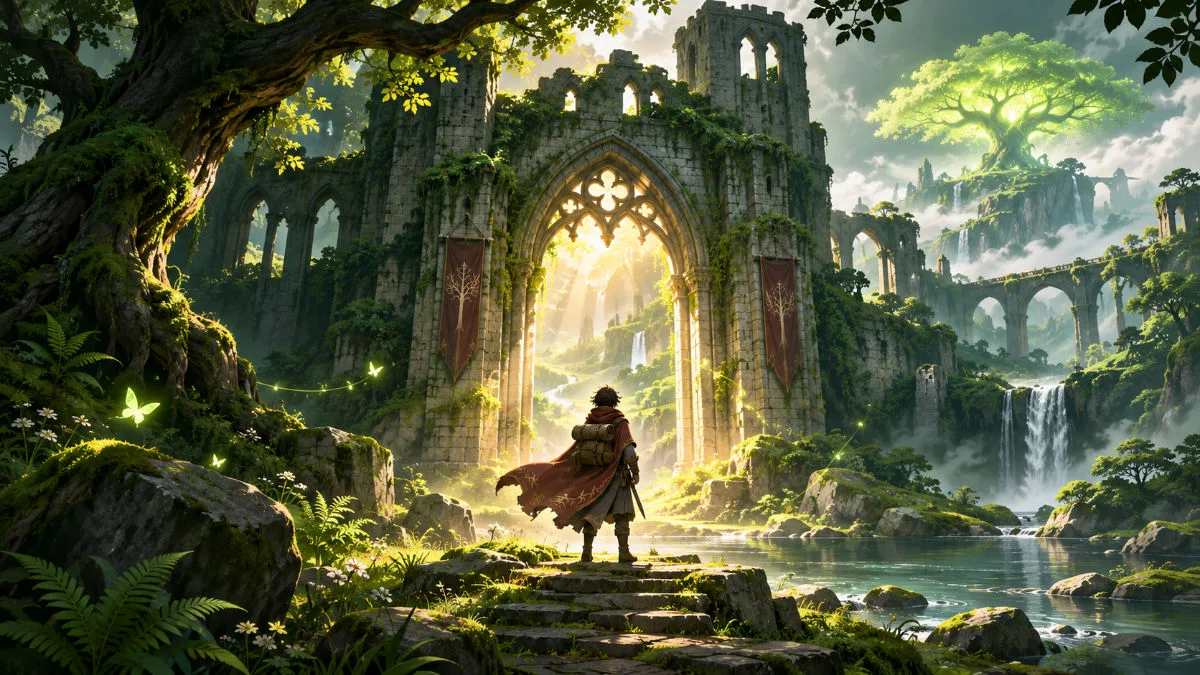
JRPGs can ask for a long commitment, so the battle system and everyday rhythm matter as much as the opening spectacle. Some stories follow a tightly directed party journey; others let you select characters and explore in a looser order. These four recommendations focus on turn-based games with distinct structures. They are useful starting points rather than a claim that one tradition or decade defines the whole genre. Pick the routine you will enjoy between major story scenes.

Editorial illustration, not a game screenshot.
Which games should you choose?
- Dragon Quest XI S: Choose it for a generous, traditional adventure with a recognizable party and approachable turn-based battles. The Definitive Edition adds features including additional scenarios, an orchestral soundtrack and a 2D mode. Its appeal includes familiar genre conventions; players looking for constant structural surprises may find the early rhythm conservative.
- Persona 5 Royal: Choose it for the contrast between dungeon exploration and a calendar of everyday relationships. Building a team has both a combat side and a social side, giving decisions outside battles lasting meaning. It has a substantial introduction and considerable dialogue; this is a long routine to inhabit rather than a quick combat sampler.
- Final Fantasy X: Choose it through the HD Remaster collection for a directed pilgrimage with clear party roles and turn-based decisions. The route allows its characters and world to accumulate emotional weight without requiring open-world navigation. The structure is more linear than many modern RPGs, and the older design remains visible beneath the remastered presentation.
- Octopath Traveler II: Choose it for eight protagonists, flexible party combinations and battles built around finding openings. Its separate journeys make choosing a favourite character and testing new combinations especially appealing. The individual stories are not arranged like one constantly united travelling party; enjoy the anthology structure on its own terms.
Compare the main differences
| Game | Best fit | Main consideration |
|---|---|---|
| Dragon Quest XI S | A classic party adventure | Traditional pacing and conventions |
| Persona 5 Royal | Social schedules and dungeon strategy | Long introduction and reading commitment |
| Final Fantasy X | A focused story and battle roles | Older structure and presentation |
| Octopath Traveler II | Character choice and battle combinations | Interwoven individual journeys |
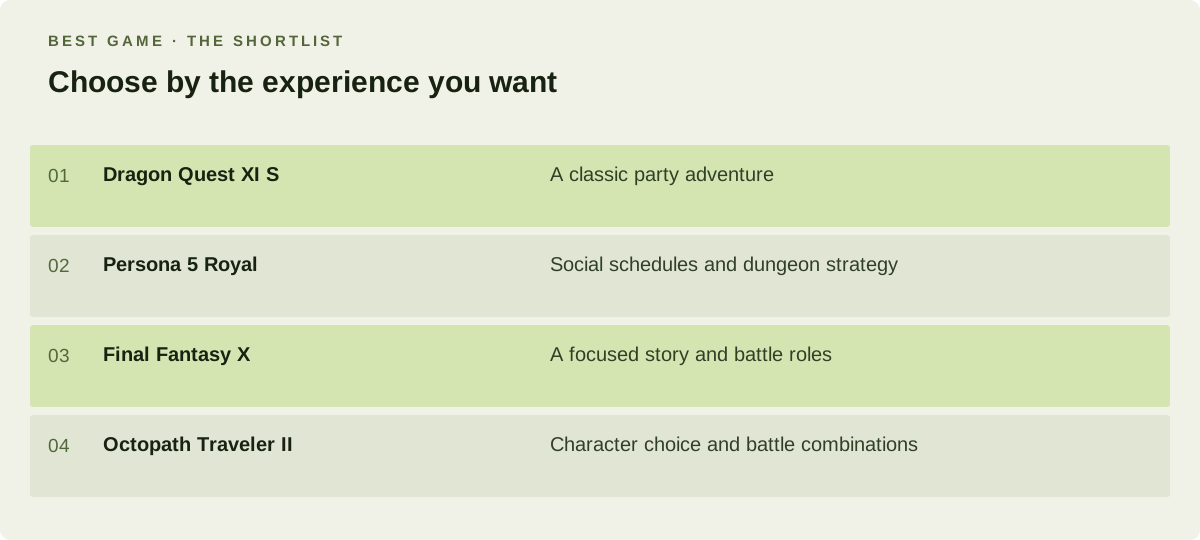
Choose by the experience you want. Comparison by play preference, not a numerical score.
Let the battle rhythm decide
Dragon Quest XI S is the clearest recommendation for a traditional starting point. Persona 5 Royal suits players who want relationships and a schedule to matter alongside combat. Final Fantasy X is better for a more directed narrative, while Octopath Traveler II puts character choice and party experimentation closer to the centre. All four give you time to think during battles, though that does not make every encounter trivial.
Avoid starting several long JRPGs at once merely because they are discounted. Try one game until its normal rhythm becomes clear, then decide whether its dialogue, encounters and travel suit you. Platform editions can differ in included content and convenience features, so check the exact listing. Those who prefer direct control in every attack may find action RPGs a better fit, while fans of calendar-based character stories have a natural next step within the Persona series.