
The best Fallout game depends on what you want to do after leaving safety behind. You might want to negotiate between factions, wander toward an unfamiliar landmark, build a settlement or share a world with other players. Those are different priorities, even when the setting looks related. These five entry points cover the series’ major styles without treating its older computer RPGs and later first-person adventures as interchangeable.
Editorial illustration, not a game screenshot.
Which games should you start with?
- Fallout: New Vegas — Factions and conflicting interests give character choices a visible place in the world. Choose it when conversations, reputation and building a particular kind of courier matter more than having the smoothest shooting or the largest construction toolkit. Older combat and technical roughness need patience.
- Fallout 4 — Scavenging, modifying equipment and building settlements make exploration feed a practical loop. It is the easiest recommendation here for players who want action and ongoing projects, while accepting a different balance of dialogue and role-playing options. Building can distract from the central journey.
- Fallout 3 — Leaving a vault for the Capital Wasteland creates a strong sense of discovery and isolation. Pick it if finding unfamiliar places and piecing together local stories is the main attraction, rather than optimizing a detailed network of faction allegiances. Its shooting and presentation show their age.
- Fallout — The original game uses an isometric perspective and turn-based combat to make character-building decisions matter differently. Choose it for a compact introduction to the setting’s harsh choices, with willingness to learn an older interface and rhythm. Limited guidance and time pressure can surprise newcomers.
- Fallout 76 — A shared Appalachia makes wandering, events and character progression part of an online world. Pick it specifically because you want that connected experience, rather than assuming it is simply another offline Fallout campaign with an optional friend. An internet connection is part of the experience.
Compare the shortlist
| Game | Best fit | Main compromise |
|---|---|---|
| Fallout: New Vegas | Faction choices and role-playing | Older combat and technical roughness need patience. |
| Fallout 4 | Exploration, crafting and settlements | Building can distract from the central journey. |
| Fallout 3 | Solitary wasteland discovery | Its shooting and presentation show their age. |
| Fallout | Classic turn-based role-playing | Limited guidance and time pressure can surprise newcomers. |
| Fallout 76 | Online exploration and shared activities | An internet connection is part of the experience. |
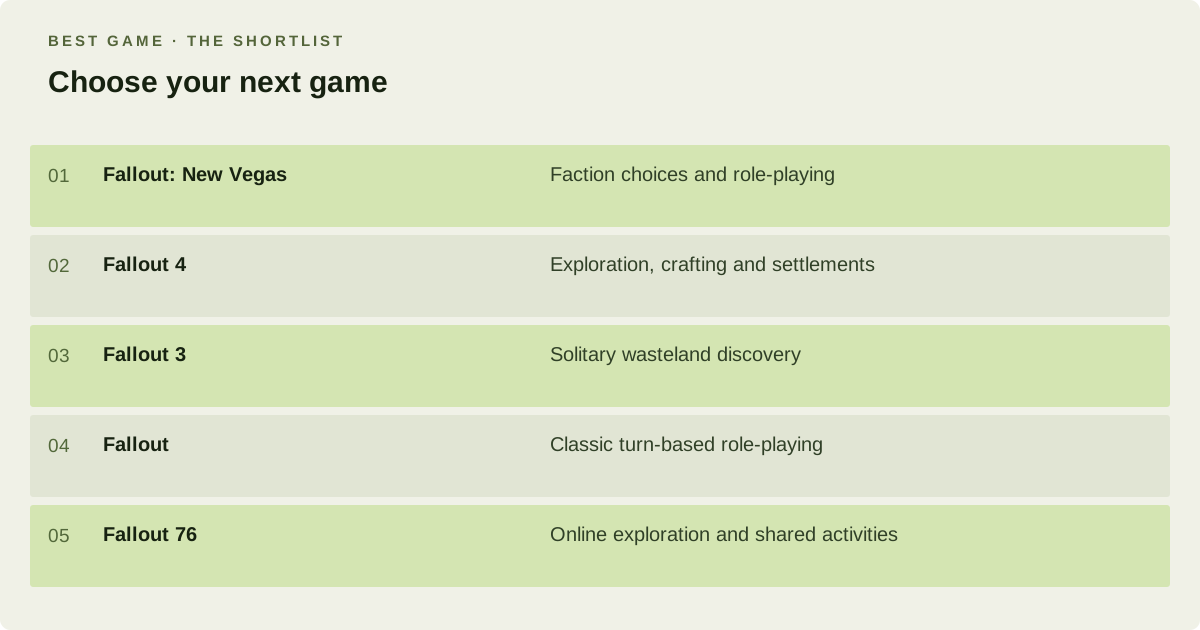
Choose your next game. Comparison by play preference, not a numerical score.
Choose the loop rather than the biggest map
Decide what progress should mean. In New Vegas, it can mean settling a dispute in line with your character. In Fallout 4, it can mean turning scavenged material into a better weapon or settlement. Fallout 3 makes discovery the attraction. The original asks you to understand older RPG rules, while 76 adds the expectations of an online world.
For a first game, Fallout 4 is a practical action-and-exploration choice; New Vegas is the stronger recommendation when dialogue and factions come first. The original is valuable for understanding the roots, but there is no need to begin there if its interface would prevent you enjoying the setting.
Check the edition, included expansions and platform requirements before purchase; an online game should not be bought with the expectation of permanent offline access. When starting, build a character around an activity you enjoy instead of trying to cover every possibility immediately. New Vegas rewards a clear idea of your courier’s priorities. Fallout 4 works well with one practical scavenging or building goal at a time. In the original Fallout, read the character rules and pay attention to the quest’s urgency rather than assuming modern guidance will keep you on track.