The best Switch RPG is the one whose ordinary hours you look forward to playing. Persona 5 Royal alternates planning daily life with dungeon battles; Xenoblade Chronicles 3 turns party composition into an evolving system; Fire Emblem: Three Houses centers decisions on a tactical map. All are substantial commitments, but their length says little about whether they fit you. This selection focuses on original Switch versions and the differences that remain after the opening spectacle.

Editorial illustration, not a game screenshot.
RPGs matched to your preferred routine
- Xenoblade Chronicles 3: A large travelling party, flexible classes and interconnected combat systems suit players who like gradually learning how a group functions. Its landscapes also make the journey between story events an important part of the appeal. Battles are real-time with auto-attacks and abilities, not conventional turn-by-turn menus.
- Persona 5 Royal: A calendar links friendships, preparation and dungeon exploration, giving decisions outside battle consequences inside it. Choose Royal when you want a contemporary setting and a strong routine of social choices alongside turn-based combat. Substantial dialogue and scheduled activities mean progress is not constant dungeon action.
- Dragon Quest XI S: Echoes of an Elusive Age – Definitive Edition: A colorful party adventure and readable turn-based battles make this the traditional choice. Towns, journeys and character episodes provide a steady rhythm, while the optional stronger-monster setting can increase the challenge for experienced players. Consider difficulty options at the start rather than expecting the default to push every system.
- Fire Emblem: Three Houses: Teaching students and developing relationships gives the tactical battles a personal foundation. Positioning, unit growth and long-term choices suit players who enjoy planning a team before taking it onto a battlefield. Monastery activities take substantial space between battles and may feel repetitive.
- Shin Megami Tensei V: Vengeance: Recruiting and fusing demons makes party replacement part of progress rather than a betrayal of favorite characters. Weakness exploitation and resource management suit players who enjoy solving a dangerous encounter through a better team. Vengeance is an expanded release; check the title instead of buying the original by mistake.
Compare the games at a glance
| Game | Best fit | Main consideration |
|---|---|---|
| Xenoblade Chronicles 3 | Party systems and large landscapes | Layered real-time combat |
| Persona 5 Royal | Social planning and turn-based combat | Heavy reading and calendar structure |
| Dragon Quest XI S: Echoes of an Elusive Age – Definitive Edition | A traditional heroic journey | Default battles can be gentle |
| Fire Emblem: Three Houses | Tactics and character investment | Extensive between-battle routines |
| Shin Megami Tensei V: Vengeance | Challenging demon-party building | Edition identity matters |
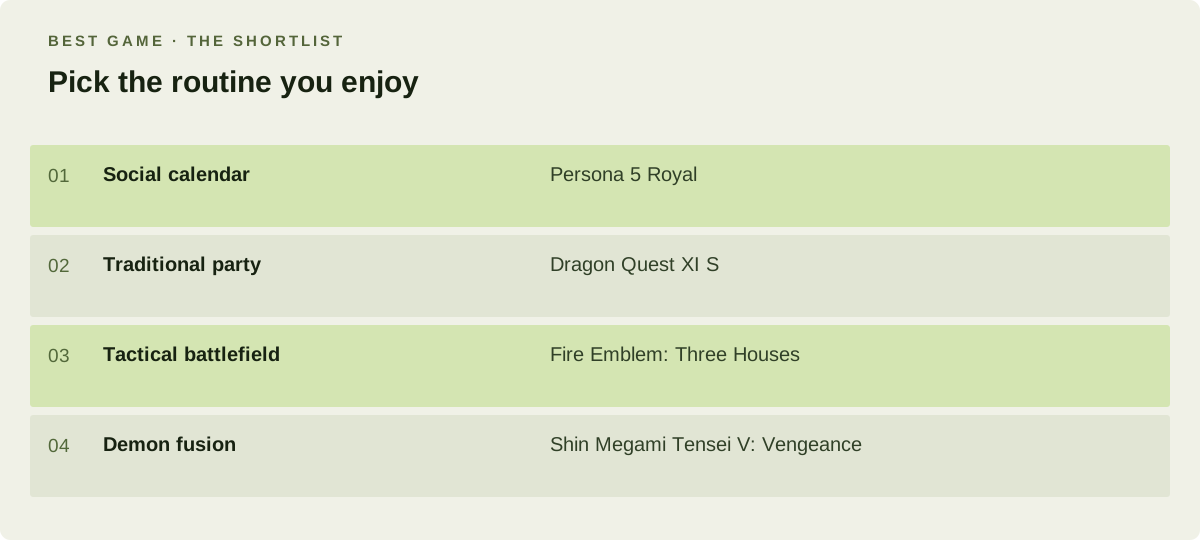
Pick the routine you enjoy. Comparison by play preference, not a numerical score.
How to choose without buying twice
Dragon Quest XI S is the safest starting point for a reader seeking a recognizable party adventure. Persona 5 Royal is better when daily decisions are as appealing as dungeon exploration. Xenoblade rewards patience with systems that build gradually, while Three Houses gives terrain and units more importance than reflexes. Vengeance suits players who want combat preparation to remain demanding. These are different expressions of JRPGs, not interchangeable ways to accumulate more hours for the same purchase.
Check the exact version and supported hardware before comparing offers. An enhanced Switch 2 edition is not the same product as an original Switch release, even when the name is similar. Avoid starting several long campaigns at once if remembering systems and story matters to you. Switch indie games offer smaller or more experimental commitments between RPGs; 3DS RPGs provide older portable alternatives. A wider look at role-playing games can also help separate tactical, action and traditional turn-based preferences.