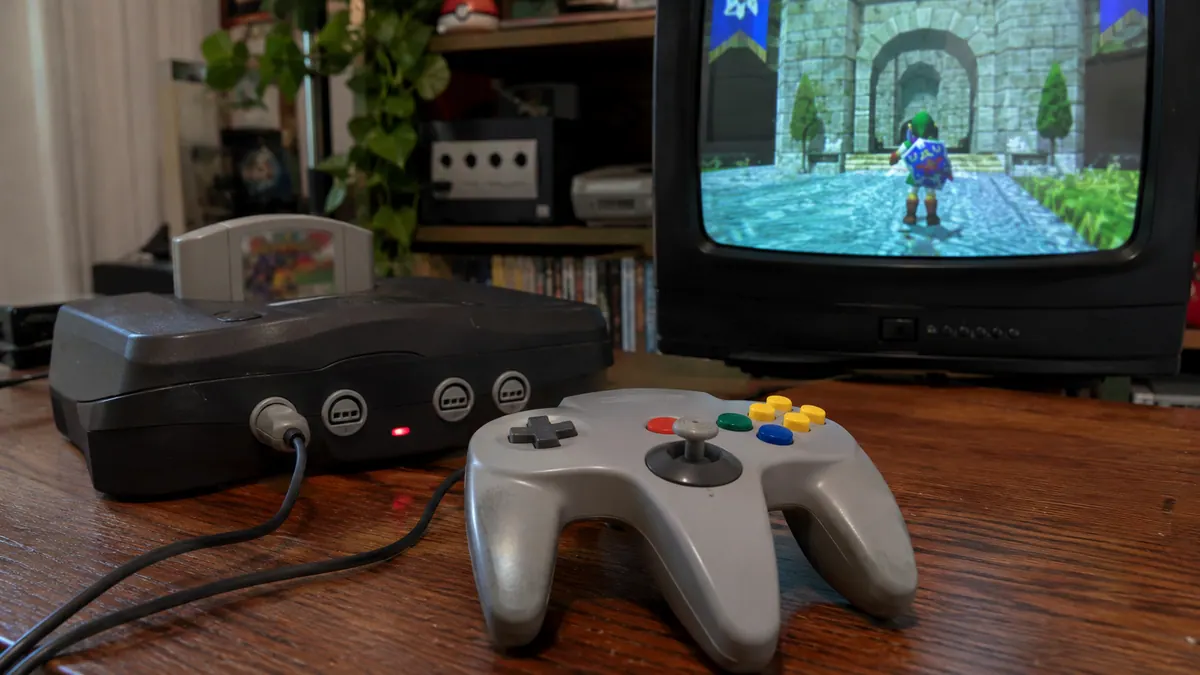
The most rewarding N64 games are not necessarily those that imitate modern controls most closely. Super Mario 64 asks you to learn movement, Ocarina of Time teaches a language of 3D exploration, and GoldenEye turns a shared television into a competitive event. Approaching them on their own terms helps. This selection explains which parts remain inviting and where original camera systems, aiming conventions or hardware arrangements need patience from a newcomer.
Five routes into the N64 library
- The Legend of Zelda: Ocarina of Time: Equipment, music and dungeon discoveries give a directed adventure a strong sense of progression. Its targeting system helps make combat readable, while returning to recognizable places creates continuity across the journey rather than a chain of disconnected stages. The original camera and interface have older conventions; later versions change parts of the experience.
- Super Mario 64: Movement is the main attraction: each course asks you to explore a space and discover what Mario’s jumps can reach. Revisiting levels for different stars makes growing familiarity useful rather than treating completion as a single exit. Camera management and precise movement take adjustment on unfamiliar controllers.
- Banjo-Kazooie: Dense themed worlds make collecting feel connected to learning a place and its inhabitants. New moves expand the puzzle vocabulary, while clear character identities give the search for the next Jiggy a playful context. Players who dislike collecting many small objects may find its structure less appealing.
- GoldenEye 007: Objective-based missions encourage you to consider the setting instead of only eliminating enemies. Local multiplayer provides a very different appeal, especially when a group enjoys agreeing on weapons, rules and favorite maps. Original aiming and movement feel unlike current dual-stick shooters; controls vary in reissues.
- Paper Mario: A readable turn-based combat system and distinct partners make this a welcoming RPG. Timing inputs during battle gives the player something active to do, while the paper presentation supports jokes and visual ideas rather than realism. Dialogue and deliberate exploration make it slower than the console’s action games.
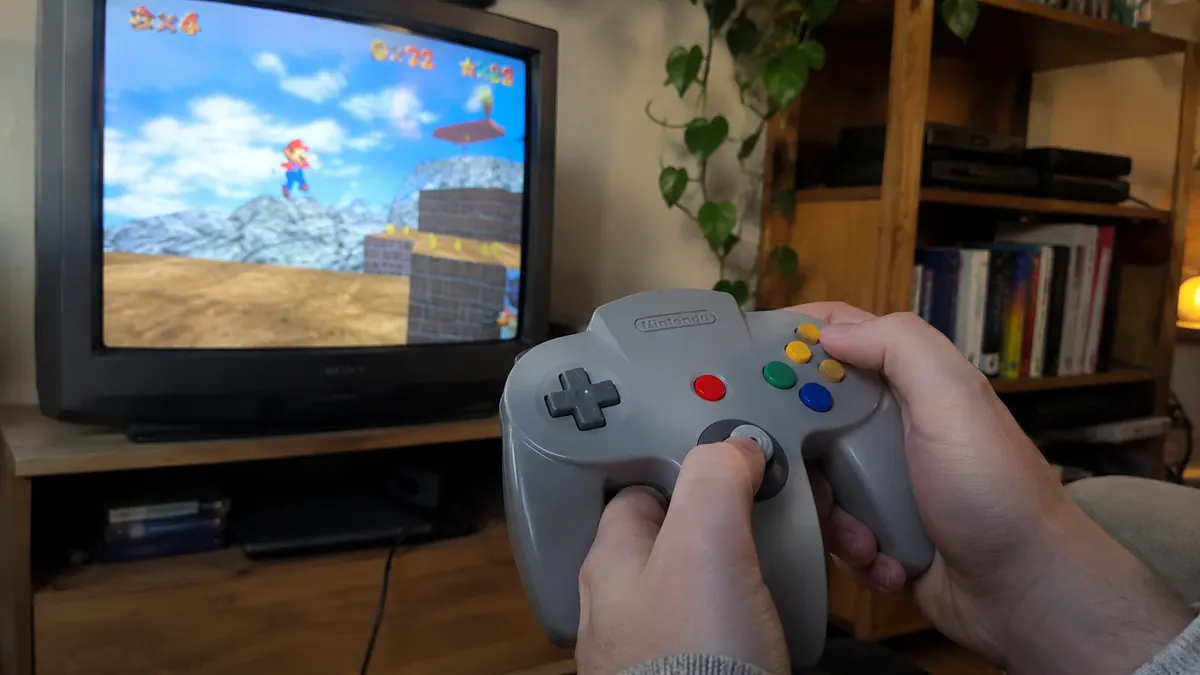
AI-generated editorial photograph with a fictional game display; not an official screenshot.
Compare the games at a glance
| Game | Best fit | Main consideration |
|---|---|---|
| The Legend of Zelda: Ocarina of Time | A structured 3D adventure | Older interface and camera |
| Super Mario 64 | Movement-led exploration | Camera can obstruct the view |
| Banjo-Kazooie | Characterful collecting and puzzles | Collectibles drive progression |
| GoldenEye 007 | Mission objectives and local rivalry | Dated original aiming conventions |
| Paper Mario | An approachable character RPG | Reading and slower pacing |
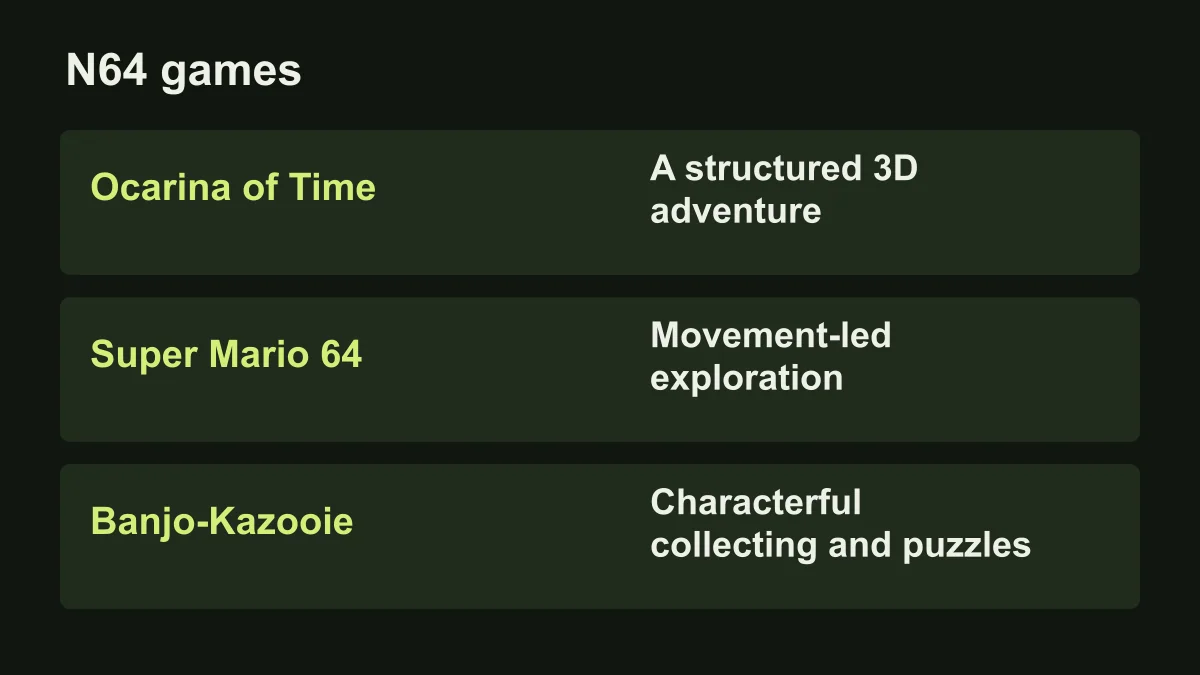
Editorial comparison based on the article; not a numerical ranking.
How to choose without buying twice
Mario 64 is the best fit if learning a character’s movement is satisfying in itself. Banjo adds more collection structure and personality, while Ocarina offers clearer milestones through equipment and dungeons. GoldenEye is worth choosing for its objectives or a planned multiplayer session, not because modern first-person shooters provide the template. Paper Mario is the alternative when you want a world to settle into without a constant demand for precise jumping or aiming. Different priorities can reasonably produce different favorites.
A comfortable controller matters more than nostalgia alone, especially when using original hardware with worn analog sticks. Official reissues may provide different control mapping and online options, so distinguish the original game from the features of the service running it. Nintendo’s current N64 Classics catalogue includes these titles, with access conditions attached to the relevant subscription. SNES games show the preceding 2D traditions; GameCube games show their later evolution. Zelda games offer a deeper comparison if Ocarina’s dungeon structure is the main attraction.