The PS2 library can turn a simple question into a collecting project. A more useful starting point is the evening you want: a quiet expedition, an intricate stealth mission or an RPG with a party to understand. These picks emphasize distinctive play rather than rarity. They also cover an important divide in PS2 games: some ask you to master older controls, while others make a surprising idea immediately understandable.
Editorial illustration, not a game screenshot.
Which games should you start with?
- Shadow of the Colossus — Choose it for a solitary journey built around finding and overcoming gigantic creatures. Climbing, stamina and observation turn each encounter into a moving environmental puzzle, with stretches of travel that let the atmosphere breathe. Camera and movement can feel awkward.
- Final Fantasy X — Turn-based battles make party roles and enemy weaknesses easy to read. Its pilgrimage provides a strong narrative spine, so this is a sensible choice if sprawling RPG games usually leave you unsure where to go next. The opening is deliberately guided.
- Metal Gear Solid 3: Subsistence — Camouflage, survival systems and flexible approaches turn stealth into experimentation. Subsistence adds the freely controlled camera that makes this PS2 version particularly useful to distinguish from the original Snake Eater release. Menus and lengthy scenes slow momentum.
- Resident Evil 4 — The PS2 version offers the original game’s stop-and-aim tension, resource decisions and escalating combat encounters. Choose it to understand an action-horror landmark on this console, rather than expecting the feel of its later remake. Aiming roots you to the spot.
- Katamari Damacy — Rolling everyday objects into an increasingly enormous ball gives each stage a funny, understandable goal. The changing scale is the payoff: yesterday’s obstacles become today’s collectibles, with music that reinforces the oddness. Twin-stick steering takes adjustment.
Compare the shortlist
| Game | Best fit | Main compromise |
|---|---|---|
| Shadow of the Colossus | Atmosphere and monumental encounters | Camera and movement can feel awkward. |
| Final Fantasy X | Structured party strategy | The opening is deliberately guided. |
| Metal Gear Solid 3: Subsistence | Patient stealth experimentation | Menus and lengthy scenes slow momentum. |
| Resident Evil 4 | Action with resource pressure | Aiming roots you to the spot. |
| Katamari Damacy | A playful change of pace | Twin-stick steering takes adjustment. |
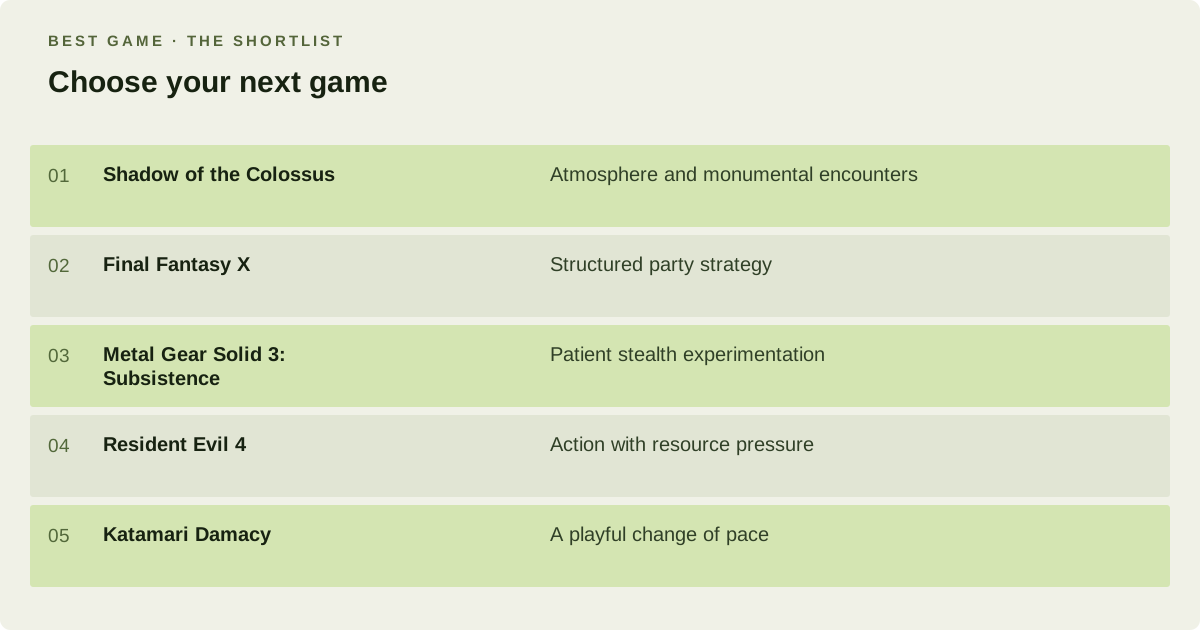
Choose your next game. Comparison by play preference, not a numerical score.
Avoid choosing a version by its cover
Match the game to patience as much as genre. Katamari is easy to understand but asks you to learn its steering. Final Fantasy X lets you think during battles. Shadow of the Colossus trades constant activity for anticipation, while Metal Gear gives curious players more room to improvise.
Several of these titles have newer releases, but the relationship differs. Shadow of the Colossus has both a remaster and a remake. Resident Evil 4 also names two substantially different games. Check release year and platform before buying; a modern edition is not automatically a substitute for a particular historical version.
Before a first session, check the disc region, controller and memory card, then choose one game to learn properly. Final Fantasy X rewards understanding party roles, while Resident Evil 4 asks you to become comfortable stopping to aim under pressure. Neither benefits from treating every fight as a race. In Katamari, practice steering before chasing a demanding target. Shadow of the Colossus is best approached without a boss walkthrough open: recognizing how a creature’s shape creates a route is much of the reward.